The Power of Connection: How Veterans Find Strength in Each Other

After being injured in Iraq and medically evacuated, Army veteran Deron Santiny found it hard to open up, even to those closest to him.
“It’s not that you don’t want to tell people what you went through. It’s that you don’t want them to look at you differently.”
So, he kept quiet. And little by little, he pulled away. “I just didn’t want to be around people,” Deron says.
But the people around him kept reaching out.
“I kept getting asked to go hunting, and I kept saying, ‘I’m not ready.’ Then one day I just got tired of hearing it and said, ‘All right, let’s go,’” Deron recalls.
What he found surprised him.
“It wasn’t the hunting that mattered,” he says. “I realized that connecting and being around veterans, that’s what it was all about. I didn’t have to explain things. They understood.”
For many veterans, that kind of connection can be hard to find after leaving the military—but when it happens, it can become a turning point.
Why Connection Matters for Veterans
At Wounded Warrior Project® (WWP), connection isn’t just a program. It’s a critical part of how veterans rebuild trust, rediscover purpose, and move forward together.
“Connection is a fundamental human need,” says Wilton Williamson, Jr., vice president of Connection at WWP®. “Whether that is a call, a text, or a meet up for coffee, research has shown that strong social bonds can improve mental, emotional, and physical health,” says Wilton.
“For veterans especially, there’s an immediate understanding when they connect with one another,” adds Wilton, a U.S. Marine Corps veteran. “They don’t have to explain where they’ve been or what they’ve experienced. The groundwork is already there.”
That shared understanding is one reason peer support is often cited as a key contributor to well-being.
Connection in ActionIn FY25, WWP:
|
In the latest WWP Warrior Survey*, 67% of warriors say talking with another veteran helps them handle stress and emotional or mental health challenges.
But many veterans are missing that connection. In the same survey, 79% of warriors report feeling isolated.
“Isolation can stand in the way of connection. And it is impossible to heal without connection,” Wilton says.
“At Wounded Warrior Project, we use social events, peer support groups, and community activities as a point of entry. But it’s less about the events themselves and more about creating the right environment so warriors can connect, and those connections can thrive,” he says.
Over time, connection and community can lead to meaningful change. Nearly 83% of warriors say their quality of life improved because of WWP.
“Connection doesn’t have to be complicated,” Wilton adds. “Sometimes it’s just a random interaction between two warriors, but that can be enough to help someone feel like they’re not alone.”
Discover opportunities to connect with WWP.
From Simple Moments to a Lifeline

For Melissa McMahon, finding a sense of community made all the difference.
“It gave me a safe place,” Melissa says of her first WWP event. “After being medically discharged, you feel disconnected … even from your own unit. It feels really lonely.”
Now, when the opportunity arises to connect with other veterans, Melissa jumps at the chance.
“When you get a group of veterans in the same room, something just clicks,” she says.
Even so, Melissa admits showing up wasn’t easy at first. “Your biggest worry is, ‘Are they going to judge me? Do I belong?’ But then you realize, when you show up, everyone is really welcoming.”
That sense of trust creates room for honesty — the kind that many veterans don’t feel they can have anywhere else.
“Our sense of humor … it’s different. We laugh about things other people likely wouldn’t understand,” Melissa says.
Additionally, peer connection opens the door to the moments that matter most.
"You never know where someone's at," says Melissa. "You could be having a really low moment, and then you get a message out of the blue, 'Hey, I was thinking about you.' That's a lifeline."
Discover more mental health resources and support.
Peer Support Means Not Doing Life Alone

Matthew Templeton, an Army veteran, admits that if it weren’t for the connections he made with other veterans, he might not be here today.
“If I had remained in isolation, I wouldn’t have made it this far. Wounded Warrior Project helped me connect with other veterans… their support motivated me to better myself, try harder things, learn new skills to improve my marriage,” he says.
Matthew recalls one moment in particular that changed how he thought about vulnerability and asking for help.
“I was at a Project Odyssey event when someone asked, ‘If a brother or sister said they needed help, how many of you would help them?’ And everyone raised their hands,” he says.
Then came the follow-up.
“They asked, ‘Now if you were in need of help, how many of you would ask for help?’ Nobody raised their hand.”
That moment stuck with him.
You could be at a really low moment, and then get a text out of the blue, ‘Hey, I was thinking about you.’ That’s a lifeline.
“I realized that I could be open and honest, and ask for help, and that there are people who genuinely care and want to help others.”
From that point on, Matthew leaned into peer support.
“Connection with other veterans makes me feel like I'm part of something greater than myself again.”
Today, he is dedicated to paying it forward and serves as a peer support group leader in Indiana. “Helping others is a way of life now. The more I do to help others, the more my soul is enriched.”
From Connection to Purpose
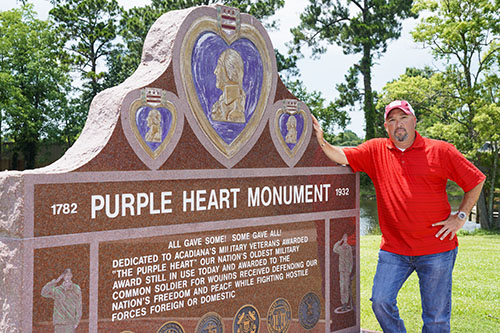
For Deron, connection also helped change the direction of his life.
Today, he serves as a commissioner of Veterans Affairs for the state of Louisiana and is the state commander for the Military Order of the Purple Heart. He also helped establish one of WWP’s largest peer support groups in the region.
But titles aren’t what matter most. Rather, it’s the small moments – like answering the phone when another veteran calls, even at 2 a.m.
“I want to make sure other veterans know they’re not alone,” Deron says, adding, “I’m not a counselor, I’m a friend. But if someone needs help, I’m going to be there to listen.”
When Veterans Find Their People
Deron, Melissa, and Matthew’s stories may be different, but at the heart of each one is the same thing: connection.
It doesn’t always start the same way. Sometimes it’s an invitation. Sometimes it’s showing up. Sometimes it’s a simple text at the right moment.
But for veterans navigating life after service, those moments can make all the difference—reminding them they don’t have to do it alone.
Find out how WWP helps keep warriors connected.
**Warrior Survey, Wave 3 (conducted June 15 - Aug. 24, 2023)
Contact: Cynthia Weiss – Public Relations, cweiss@woundedwarriorproject.org, 904.738.2589
About Wounded Warrior Project: Wounded Warrior Project® (WWP) is the nation’s leading veterans service organization, focused on the total well-being of post-9/11 veterans, active-duty service members, and their families. Our programs, advocacy, and awareness efforts help warriors thrive, provide essential lifelines to families and caregivers, and prevent veteran suicides. Learn more about Wounded Warrior Project.

Run a mile. Do 100 pullups. Then 200 pushups. Follow that with 300 squats. Finally, run another mile. Do this entire sequence while wearing a 20-pound vest or body armor. Now, do it again. And...

Wounded warrior Melissa McMahon’s mental health journey saw her battle suicidal ideations to then finding solace and purpose through Wounded Warrior Project® (WWP) programs and racing. Now she...

For many military service members, overcoming challenges and finding a way forward is part of the job. But when faced with mental health challenges – such as post-traumatic stress disorder...