Never Forget: Teaching Future Generations About 9/11 and Those Who Served

On Sept. 11, 2001, the U.S. — and the world — changed in an instant. Terrorist attacks on the Twin Towers in New York, the Pentagon in Washington, DC, and the crash of United Flight 93 in Pennsylvania claimed nearly 3,000 lives. The day reshaped the nation, revealing the darkest sides of humanity while also showing moments of American resilience.
In the wake of 9/11, America’s military went into action, beginning what would become 20 years of war in Iraq and Afghanistan.
For many Americans who witnessed 9/11, the memory of where they were and what followed remains vivid. However, younger generations often struggle to understand the impact fully.
The aftermath of 9/11 brought major changes to national security, infrastructure, and everyday life for many Americans. A generation of veterans also stepped forward to carry the weight of these wars for two decades. Understanding these stories is essential to preserving the memory and meaning of 9/11.
Helping Students Understand 9/11

Marine veteran Wayne Wetzel teaches Homeland Security Sciences at the same school he attended when 9/11 took place.
One of the most significant responses to 9/11 was the creation of the Department of Homeland Security, tasked with protecting the U.S. from a wide range of threats, including terrorism.
Wayne Wetzel, an instructor of Homeland Security Sciences and Emergency Preparedness at South Hagerstown High School in Maryland, helps younger generations understand the changes brought on by 9/11.
Wayne was in high school — the same one he teaches at now — when the 9/11 attacks took place. He had already considered joining the military after graduation, but 9/11 solidified his decision. In 2004, Wayne joined the Marine Corps.
He often uses his experiences to engage with students who were not born when 9/11 happened. “They all are very receptive to it [hearing the story],” Wayne said. “A lot of them just don't know how big it was or how much of an impact it had. But they want to learn. They want to know about it.”
Wayne incorporates newspaper articles, research documents, and historical videos into his lessons. He’ll then ask students to reflect on what they read and saw and complete different assignments to process the experience.

Wayne in Iraq with his Marine Corps unit. Though only in high school on 9/11, that event helped solidify Wayne's decision to join the military.
While his lessons don’t specifically address the wars that followed 9/11, they definitely come up. As a post-9/11 combat veteran, Wayne discusses his military experiences and shares the importance of service. “They usually ask questions like, ‘Why did you serve? ' and those kinds of things,” Wayne said. “It piques their interest. Some of them are even looking at joining the military themselves, and they are very inquisitive about what it’s like.”
This year, Wayne is including the Honor Their Courage program from Wounded Warrior Project® (WWP) in his curriculum. Honor Their Courage offers flexible educational resources, lesson plans, and fundraising ideas for students from kindergarten through 12th grade to harness an enthusiasm to improve veterans’ lives. One of the exercises in the Honor Their Courage program asks students to interview a veteran or family member about their experiences on or after Sept. 11.
Wayne came across Honor Their Courage through social media and thought it would be a good fit for his class.
“I was looking for something to get the kids involved in, and this came up,” Wayne said. “I thought it would be a good way to support Wounded Warrior Project and show them how they can raise money for various projects and show support.”
A Warrior Teaches His Children About 9/11’s Impact
Like Wayne, Juan Valdez was in high school on Sept. 11, 2001. He was doing ROTC drills at his Boston school when they learned about the attacks. He remembers the train ride home that day being different. The usually noisy crowd of teenagers was quiet and somber. He recalls just feeling angry that someone would do this.

WWP warrior and Marine veteran Juan Valdez with his two younger children.
“I already wanted to join the military, but it really helped ramp things up,” Juan said. I started talking to a recruiter after that, even though I was still too young to join. It was like nitrous oxide in a racing car — it propelled me to my decision.”
In 2004, Juan joined the Marine Corps. Naturally, his parents were concerned but supported his decision. He first deployed to the Persian Gulf aboard a Mediterranean float. A year later, he deployed to Iraq.
“That was my true first taste of combat,” Juan said. “The convoy in front of us had hit an IED, and I had to wait for that to clear. It took us a minute to get out there. I ended up getting shot in the chest by a sniper on that deployment. That's how I got my Purple Heart.”
Despite that injury, Juan stayed in the Marines and completed additional deployments, including another tour in Iraq and one in Afghanistan.
“I went with the expectation that I was going to die there,” Juan said of his Afghanistan deployment. “I thought this was my fate, but I was going to do everything to keep my Marines alive. Luckily, not only were we able to do that, but we were also able to excel there. I was happy to come back from that deployment in one piece.”

Juan believes it's important to share the impact 9/11 had on the country, and on him personally, with his children.
Juan retired from the Marine Corps on Dec. 30, 2013, and faced a new set of challenges. “It was a struggle. I was a lot angrier, just angrier at life,” Juan said. “Although I understood at that point that I needed to get help for my mental health, I started to feel myself getting back into old habits.”
Juan was able to find his way out of the hole with the help of others, including WWP. He recalls WWP arranging for him to take his daughter to her first baseball game, even if it was the Yankees and he’s a Red Sox fan.
“The Yankees were playing the Padres that day, and I was like, you know what? Even though it's blasphemy for me to do something like that, you make sacrifices for the people you love,” Juan joked.
From there, Juan became more involved with WWP’s programs and services, accessing resources that helped him find a civilian job, improve his physical health, and strengthen connections with other veterans and his family.
Juan has four children, three daughters, ages 22, 20, and 9, and a 6-year-old son. Though none were around during the events of 9/11, he believes it’s important for them to learn about it and how it played such an important role in their father’s life, and their own.
“We have conversations about very complex things, because I want them to think critically for themselves. They challenge me a lot on things, which is great and terrible at the same time.”
Juan said they use books to help the kids understand more about the events of 9/11, tailoring each to his child’s age and level of understanding.
“I love using stories,” Juan said. “I love finding a book because the book is going to influence my conversation. I just talk to them about how it affected me that day, and how it affected friends. I explain the lives lost on that day, and how it was a huge wound. I try to keep it as simple as possible and let them ask questions.”
On the anniversary of 9/11, Juan said the family makes sure to remember the impact of that day.
“Usually, we have a moment of silence, and we say a prayer for the families and friends who lost someone they love,” he said. “We say a prayer for those who were affected afterwards. And we say a prayer that it doesn't happen again, and we keep innocent people safe.”
Juan eventually ended up working for WWP, first as a grassroots and constituent affairs coordinator and currently as spokesperson, sharing his story of service and raising awareness of the needs of post-9/11 veterans.
“Wounded Warrior Project helped me get my life back together. Not only that, it gave me a mission,” he said.
Never Forget: Healing Is a Shared Journey
“Never forget” became the rallying cry after Sept. 11. It affected everyone, and that sense of shared experience, Juan sais this is what makes storytelling so powerful.
For Juan, part of healing and honoring the past is making sure the next generation understands the values that emerged from that difficult time.
“We can't let them forget,” he said. “We need to make sure that we share the message of unity. We're all Americans, regardless of background or where you came from. I believe in this country, and we have to make sure that we share that with generations to come.”
Find out how WWP helps post-9/11 veterans thrive for a lifetime.
Contact: — Paris Moulden, Public Relations, pmoulden@woundedwarriorproject.org, 904.570.7910
About Wounded Warrior Project
Wounded Warrior Project is our nation’s leading veteran services organization, focused on the total well-being of post-9/11 wounded, ill, or injured veterans. Our programs, advocacy, and awareness efforts help warriors thrive, provide essential lifelines to families and caregivers, and prevent veteran suicides. Learn more about Wounded Warrior Project.

Like many teenagers, Antoinette Wallace wasn’t sure what her future held. Though she dreamt of becoming a lawyer, the military was not on her radar screen. But on Sept. 11, 2001, the...

Every July 4, America celebrates its independence — from its roots to its present. Few embody the spirit of American independence more profoundly than the men and women who serve in the U.S....

Behind every veteran is a story — not just of war and wounds but of service and sacrifice. Listening to these stories is more than an act of respect. Opening our ears to these experiences helps...
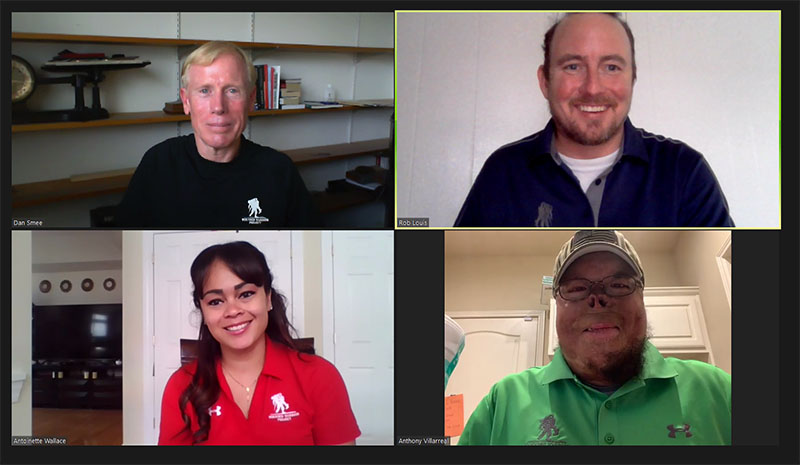
The attacks on Sept. 11, 2001, changed our nation. For many veterans, the attacks changed their lives more directly. Recently, Wounded Warrior Project® (WWP) brought together three veterans who...