Redefining Service and Support for Women Veterans
By Jennifer Silva, Wounded Warrior Project Chief Program Officer
A third-generation service member, Jessica Roza’s call to serve began long before she put on the uniform. Her upbringing, marked by instability, constant change, and domestic violence, strengthened her resolve to make sure others had the support she did not and taught her the importance of stability, protection, and speaking up for those who need it.
Those early lessons in resilience and advocacy guided her through eight years of service in the Army National Guard and Army Reserve, where she transformed them into meaningful action and purpose after service.
Now a Warrior Advocate Leader with Wounded Warrior Project (WWP)®, Jessica continues that mission—amplifying women warriors’ voices and shining light on challenges that mirror her own. Her story is unique, yet it reflects the shared obstacles and strength of countless women veterans – the fastest-growing population within the veteran community.
A Path to Service Shaped by Survival
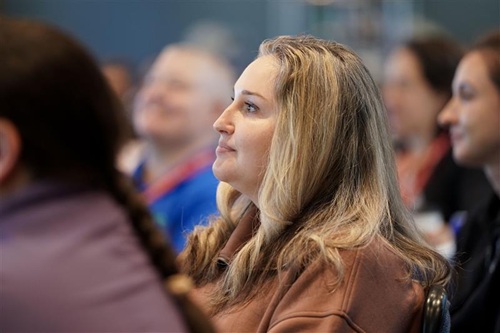
Jessica Roza draws on her military experience and personal journey to advocate for the needs of women veterans.
Jessica joined the military driven by a desire to improve the system that had once failed her family; she dreamed of becoming a paralegal and JAG Officer. But her path forward was not without hardship. While pursuing her goals, she endured military sexual trauma and intimate partner violence—experiences that mirror the difficult truths many women warriors have faced. According to WWP’s Women Warriors Report, over half of WWP women warriors reported they are military sexual trauma survivors (53%).
“Women often serve quietly,” she explained. “We’re carrying complex layers of trauma. It might be military sexual trauma, barriers to parenting or caregiving while serving, or just trying to navigate systems that simply weren’t built with our needs in mind post-service. It’s hard enough for an average veteran, but with these additional barriers, it becomes even more difficult.”
Jessica’s commitment to service still never wavered. She chose to transform her hardships into advocacy, determined to create the kind of reform and support she once needed herself. But first, she needed to discover who she was after the military.
At first, Jessica couldn’t even see herself as a veteran. “A lot of us don’t identify that way, especially women,” she explained. “We identify as someone who has served in the military. But if you ask, ‘Are you a veteran?’ many women will say no. And I was one of those people.”
Navigating Civilian Life through Connection
For Jessica, leaving the military wasn’t just about finding a new career path — it was about rebuilding her identity and sense of belonging. “I was a military brat, I joined the military, I married military — and so I really felt like I was losing my entire community,” she said.
Jessica’s experience is not unique; more than eight in ten (83%) WWP women warriors feel isolated. And many often face a lack of recognition and respect as veterans in civilian life, with several reporting lost or conflicted identities during transition. It was this isolation and feeling of being overlooked that made finding a supportive community so critical.
Through WWP peer support groups, Jessica found mutual understanding and the reassurance that her story mattered. Peer support became a lifeline—offering community and a space to share experiences and process trauma with others who relate.
For many women warriors, this connection is the most relied-upon resource—72% say talking with another veteran helps them manage stress and emotional challenges.
“We’re not broken,” she emphasized. “We are leaders, we are mothers, we are community builders, we are survivors.”
The Power of Advocacy
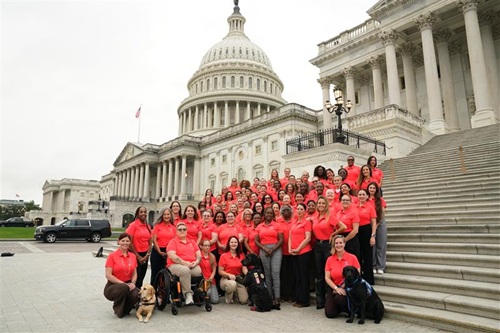
Jessica stands with other women veterans at the U.S. Capitol during Wounded Warrior Project’s Women Warriors Summit.
Jessica’s renewed sense of community fueled her advocacy. Drawing on her experiences, she now works to amplify women veterans’ voices locally and nationally so the next generation of veterans can thrive where she once struggled.
“Shame lives in silence,” she said. “But when you give life to the story, when you share your story, it allows people to understand and fight back against the stigma that we carry.”
She often travels to Washington, D.C., to meet with legislators — this year with more than 75 other women warriors at WWP’s Women Warriors Summit. She also founded her own organization to ensure women veterans have a seat at the table.
WWP’s Women Warriors Report highlights that too many women veterans feel unseen. One way to close that gap is to engage more women veterans in leadership and policy discussions, sharing their stories. Jessica is determined to do just that.
“Women like me — that look like me, that have experienced things like me, that are Guardsmen like me — deserve the same equity. Our service counts. Our struggles are valid. Our voices matter.”
You’re Not Alone: Resources for Help
Every woman Veteran carries her own story of service, sacrifice, and strength — and no one should have to carry that alone. Below are a few places to turn for support.
Wounded Warrior Project Women Warriors Initiative: Supports post-9/11 women veterans, raising awareness and driving change through efforts like the Women Warriors Report. Learn more about what WWP is doing for women warriors.
VA Center for Women Veterans: Offers resources, advocacy, and programs tailored to women who have served. Learn more about their work.
Veterans Crisis Line (24/7): If the weight feels too heavy, help is a call or text away: Dial 988, then press 1, or text 838255.
These resources are more than programs—they are doorways to connection, care, and community, empowering veterans to thrive for a lifetime. Reaching out isn’t weakness; it’s courage. It’s one more way to redefine what it means to be a veteran: resilient, strong, and never alone.
Contact: Kaitlyn McCue, Public Relations, kmccue@woundedwarriorproject.org, 904.870.1964
Bio for Jennifer Silva, Chief Program Officer:
Jennifer Silva, Wounded Warrior Project® Chief Program Officer, is a West Point graduate and former Army logistics officer. Since joining WWP in 2008, she has spearheaded mission-critical programs supporting veterans in education, employment, and long-term economic empowerment.
About Wounded Warrior Project
Wounded Warrior Project® (WWP) is the nation’s leading veterans service organization, focused on the total well-being of post-9/11 veterans, active-duty service members, and their families. Our programs, advocacy, and awareness efforts help warriors thrive, provide essential lifelines to families and caregivers, and prevent veteran suicides. Learn more about Wounded Warrior Project.

Women represent the fastest-growing population in both military service and the veteran community. As women transition out of the military, they face unique challenges that can hinder their...

How Wounded Warrior Project Is Partnering to Empower Women in Business Ownership For many women veterans, hanging up the uniform and kicking off the combat boots doesn’t signify the end of a...

Service is uniquely engrained in all warriors, and for Caroline Fermin, communications and advocacy have always been key aspects of the meaning of service. She spent 25 years in the Marine Corps,...