'I’m Still Here:' How An Air Force Captain Turned Doubt Into Drive

Tyshawn Jenkins learned at an early age what it feels like to be doubted.
The eldest son of eight children, Tyshawn often heard others share their opinions about his future. Teachers and authority figures questioned his potential and dismissed possibilities before he could discover what fit. As a teenager growing up in Asbury Park, New Jersey, those messages followed him. But eventually, those doubts empowered him.
“Everyone has their fuel,” Tyshawn says. “For me, it was — and is — the negativity. The naysayers. The people who say I can’t. That’s what motivates me.”
Today, Tyshawn carries several titles: Dr. Jenkins, U.S. Air Force Capt. Jenkins, and warrior. He holds a Ph.D., is an educator, an advocate, and a peer leader for Wounded Warrior Project® (WWP). In every role, he talks openly about his lived experiences, addressing realities many may prefer to avoid, including racism, rejection, grief, and the invisible wounds military personnel can wrestle with during and after service.
Proving Them Wrong
Tyshawn spent much of his childhood shuttling between parents, navigating complicated family dynamics, and watching addiction affect many people he loved.
School wasn’t easy for Tyshawn, but he stayed driven. He earned good grades, served as vice president of the student council, president of the Spanish club, and ran track. Even so, people underestimated him.
He remembers a high school teacher discouraging his dream of becoming an attorney, telling him he’d never pass the bar. Others voiced similar doubts, warning him not to apply to elite schools because “someone like you wouldn’t be chosen.”
Tyshawn went on to attend The College of New Jersey, but says one of his few regrets is not applying to Princeton. “That’s the thing about doubt,” he says. “Sometimes it comes from other people, but then you internalize it. And it can take over your confidence.”
Embracing Change Through Service

Tyshawn with his uncle, who served in the Army.
Tyshawn grew up with military service in his family. Both grandfathers served in the Army, along with an uncle. Another uncle served in the Marines. But his relatives’ trauma from World War II and Vietnam lingered across generations, and it made his family approach military service with caution.
Then 9/11 happened, and Tyshawn felt something shift. “There was more left on the table for me to do. I wanted to serve,” he says.
For a moment, others’ warnings that he wouldn’t be a good fit for the military resurfaced.
“They said it would change me,” Tyshawn recalls. “But I wanted it to change me.”
Tyshawn joined the Air Force in 2010 at age 27. He entered with maturity, perspective, and a drive to lead. Over the course of his career, Tyshawn served in multiple roles, including aircraft fuel maintainer, intelligence analyst, and public affairs officer.
Though he did not deploy to Iraq or Afghanistan, experiences at duty stations in Qatar, Guam, Albania, and Cyprus left a lasting impact on Tyshawn.
“There’s this misconception that if you didn’t go to Iraq or Afghanistan, you didn’t really serve,” he says, adding that he not only sustained physical injuries on the job, but saw things that deeply affected him.
“But when you’re watching bombs detonate, and seeing people scatter, enemy or not, and you’re witnessing human beings in fear, those things affect you.”
When Service Leads to Silent Struggles
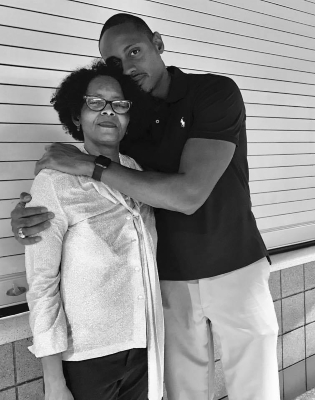
Tyshawn and his mother.
During and after his deployments, Tyshawn admits he faced challenges that many service members often carry in silence — betrayal, racial bias, and repeated professional rejection.
When Tyshawn’s marriage unexpectedly ended during one deployment, the loss brought up old family trauma, and doubt crept back in. Then, his military career seemed to stall, and the uncertainty only grew.
“It definitely affected my mental health. There were moments I wanted to quit,” Tyshawn admits, his frustration still evident as he talks about being denied more than 10 times over a decade to become a commissioned officer.
“I carried these things quietly. I internalized a lot of it,” he says.
Then he remembered the doubters – those who said he’d never succeed.
He also remembered his biggest cheerleaders.
Learn More WWP's Mental Health Resources
The Invitation That Led to Healing
Tyshawn began looking for support, but, like many veterans, he didn’t think organizations like Wounded Warrior Project were meant for people like him.
“I did that comparative suffering,” Tyshawn says. “I told myself, ‘That’s for amputees, burn victims, people with major TBIs. Not someone with invisible injuries like me.’”
It was honestly the first time I connected to other warriors and just talked.
In November 2015, a friend he’d known for almost 20 years, who was an injured Navy veteran, invited Tyshawn to attend a Veterans Day parade in New York City.
Reluctantly, he went.
The experience challenged everything he thought he knew about injury, worthiness, and belonging.
“I met veterans who got hurt in training, whose careers ended before they really began. I realized I was wrong about what ‘counts’ as an injury, but the impact was the same. The pain and loss are real," he recalls.
Perhaps most important, he says, “It was honestly the first time I connected to other warriors and just talked. No rank. No competition. Just truth.”
He left with renewed insight: Wounded Warrior Project was for him, too.
Discover How WWP Can Be There For You, Too
The Power of Connection
The conversations didn’t end when he left the parade. Tyshawn began embracing opportunities to connect with other veterans, which opened the door to healing.
Tyshawn points to a Project Odyssey retreat as the turning point in his life. This adventure-based mental health program asks participants to look at challenges from a new perspective. For Tyshawn, that meant crossing one of the area's longest bridges, despite a deep fear of heights. He also began journaling, reflecting on his past trauma, loss, and uncertainty about his future. On the final day, he took part in a ritual that would stay with him for years.
“Each participant wrote their fears and pain onto a paper lantern. Then, together, we released them. It wasn’t just symbolic,” Tyshawn says. “It was to start a practice of letting go.”
Soon after, Tyshawn leaned into WWP™ even more. He didn’t just attend events; he connected with people, built relationships with other veterans, rediscovered camaraderie, and held onto a simple reminder: “no one gets left behind” — not at work, not at home, not in life.
He now leads a peer support group for veterans just outside of Philadelphia. For more than a decade now, he’s lived the WWP logo, helping to carry other veterans, just as others did for him.
Being Seen and Supported
Tyshawn doesn’t talk about connection in abstract terms. For him, it’s personal. And at times, lifesaving.
“Many of our brothers and sisters in arms are carrying heavy things they’ve never told anyone, and they’re still expected to lead, deploy, and take care of others.”
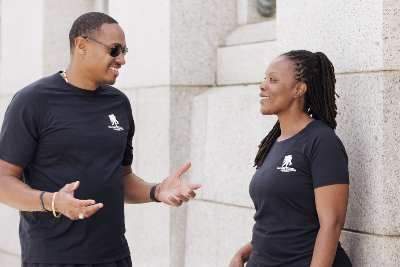
He points to fear and stigma as reasons people stay quiet about mental and emotional struggles. That silence carries weight. It also makes connection even more critical.
“People are still here because someone listened.”
WWP provides a safe space for service men and women to seek guidance and build community, Tyshawn says. “WWP gives you room to be honest. You can get help without worrying how it’s going to follow you.”
On his own hard days, Tyshawn turns to the same peer support network he helps lead. “If I didn’t have those people a call away, it would be a lot harder to get through certain moments.”
Connection, Tyshawn believes, is not a luxury. It’s a necessity.
“None of us were meant to do this alone,” he says. “And when people feel seen and supported, that’s when real healing can start.”
Overcoming Doubt Through Storytelling and Education
Tyshawn ties education to success. Initially drawn to psychology and therapy, he shifted gears to study business. Today, he holds an MBA and a Ph.D. in business administration.

Tyshawn is a professor at multiple universities, helping the next generation of students find their passion. He often draws on his military experience and his work with WWP, sharing stories to help students understand leadership, empathy, and resilience.
“People first. Mission always,” he says. “You can’t accomplish the mission if you don’t take care of people.”
In 2022, Tyshawn stepped into a new role with WWP and began sharing his story with communities across the country. Almost weekly, you can find Tyshawn speaking as part of WWP’s Warriors Speak team, sharing about what military service asks of people and what it can leave behind.
“Veterans all have a story, but not everyone can tell their story; that’s why I do it,” he says, adding that
‘I’m Still Here’
Given the instability and hard seasons that shaped his early years, Tyshawn admits there was a time when he couldn’t imagine the life he leads today.
“I didn’t think I’d be here,” he admits.
Over time, though, Tyshawn realized others’ expectations didn’t define him.
“I stopped chasing what [others] thought I was supposed to do. I stopped worrying about where I fit in. I focused on doing work that I believe in, work that matters, work that helps people,” he says.
And to the people who once doubted him, his response is assured: “I’m still here. And that means something.”
Discover Opportunities to Connect with WWP.
Contact: Cynthia Weiss – Public Relations, cweiss@woundedwarriorproject.org, 904.738.2589
About Wounded Warrior Project
Wounded Warrior Project is our nation’s leading veteran services organization, focused on the total well-being of post-9/11 wounded, ill, or injured veterans. Our programs, advocacy, and awareness efforts help warriors thrive, provide essential lifelines to families and caregivers, and prevent veteran suicides. Learn more about Wounded Warrior Project.

Army veteran Sean Sanders was used to leading teams and showing strength and courage daily. “The military teaches you to be self-reliant,” Sean said. “I was proud of who I had become through...
Air Force veteran Sam Hargrove served her country for more than a decade and experienced a tough transition from the regimented military world to an unfamiliar civilian lifestyle. Women like Sam...

When one warrior carries another, both grow stronger. The image of one warrior carrying another is more than just a logo to the many veterans served by Wounded Warrior Project® (WWP). While the...