How Laughter Helps Veterans Heal

At age 8, Dewayne White told everyone he wanted to be a stand-up comedian. But at 17, he enlisted in the Army. His love for comedy followed him, though. Laughter became a way to get through challenging days, including multiple deployments to Bosnia and Iraq.
Fellow veteran Danny Bahena also dreamt of a life on stage. He loved performing and making people laugh. But when he joined the Air Force as a military police officer, his creativity took a back seat.
Years later, both men turned to Wounded Warrior Project® (WWP) to navigate life after service.
Through WWP® and its community partner, Armed Services Arts Partnership (ASAP), Dewayne and Danny found a robust support network and a new path forward. They used humor to connect with veterans. With time, they found it helped them heal and build resilience.
An Escape from Reality
Born in the United States to Mexican immigrant parents, Danny grew up watching them juggle long hours and heavy responsibility.
Stress and tension were a regular presence at home.
“They were in survival mode,” he says.

Danny found refuge in the arts. He wrote poetry, made short films, and performed on stage.
“I always wanted to be on stage,” he says. “But I didn’t see many people like me doing it, so I assumed it wasn’t meant for me.”
That belief — along with a deep sense of responsibility to support his parents — led Danny to the Air Force.
As a military police officer, no two days were ever the same.
Danny says he lived in a constant state of hypervigilance. “I was always on alert. My nervous system became very conditioned to being overactive.”
Danny also struggled to process the trauma he experienced on the job.
The stigma around mental health kept him quiet. “In that environment, I had to project control at all times," he says.
His creative spirit suffered. “I spent six years feeling like I couldn’t be creative. I felt like a shell of myself.”
Danny began having thoughts of suicide. "I was going down a dark path."
Fear of judgment is one of the most powerful things that keeps us from seeking help.
Looking back, he says, he came closer than he thought he could.
Laughter is the Best Medicine
It’s a cliché for a reason. Laughter helps.
The Department of Veterans Affairs (VA) recognizes the many healing benefits of humor and laughter and how they help the mind and body, including:
- Lowering cortisol (the body’s primary stress hormone)
- Releasing dopamine and endorphins (the “feel good” hormones that help improve mood)
- Helping the nervous system shift out of fight-or-flight mode, even briefly.
- Laughter increases pain tolerance.
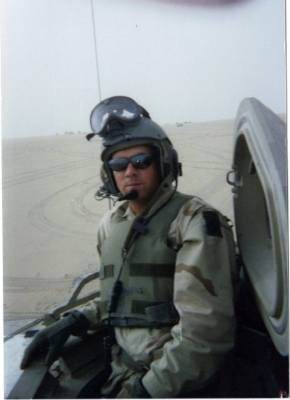
For veterans whose bodies and minds remain on high alert after service ends, those moments of relief can be powerful, says Dewayne.
He remembers joking with fellow soldiers during deployments, finding levity even in the most serious situations.
”Military humor is dark. It’s cynical,” he says. “But it helps you process stuff that isn’t normal or easy. In the moment, humor gives you a way through.”
Recognizing the value of laughter, WWP’s partner, ASAP, launched a veteran-focused Comedy Bootcamp®. Described as “the first-ever stand-up comedy class for veterans, service members, and military family members,” the six-week program uses humor to help veterans improve their mood, build emotional resilience, and coping skills.
Research led by ASAP and published in HUMOR: the International Journal of Humor Research, noted that active-duty soldiers who used humor as a coping strategy had fewer PTSD symptoms and improved outlooks after combat.
Finding Connection to Your Past
For Dewayne, the transition to civilian life was relatively uneventful.
In 2015, after 23 years, he left the Army and moved into a government job similar to the one he had in the military. Life felt stable but incomplete.
“When you leave the military, you miss the people, the shared experiences,” he says.
I had not idea the amount of deep friendships I would gain and experiences I would have.
WWP helped restore that sense of belonging.
Dewayne first learned about WWP during his transition period. Not long after, he began participating in various peer activities and alumni events.
“They gave me a way to meet people,” he says. “The coolest part was reconnecting with other veterans who understood where I had been … it really helped my family and me.”
Dewayne couldn’t have predicted how WWP would help him reach a goal he’d had since childhood.
Rediscovering Your Authentic Self
Danny left the Air Force in 2018 after six years of service. He moved into public safety work — work that mirrored his military experience. As a dispatcher, he responded to emergencies, often listening to trauma unfold over radios and phones.
“My nervous system never really turned off,” he says.
Danny found support through the VA. With therapy and other treatments, he began to improve, but reconnecting with his creativity still felt impossible.
“I was desperately seeking ways to get back to my authentic self, but when I was in the room with other civilians, I would feel out of place,” he explains. “A lot of things I wanted to talk about, I knew most people wouldn’t understand.”
Then one day, he saw a Facebook post from ASAP about a veteran comedy workshop.

At first, he hesitated.
“Fear of judgment is one of the most powerful things that keeps us from seeking help,” he says.
But then he reminded himself what made this different: “This was a space made for veterans. Both parts of me could exist there.”
During the six-week course, Danny found a new perspective. “I learned how to view life through a comedic lens,” he says.
He also found connection.
“Before, I felt completely alone in my experiences. I was isolating and didn’t know how to connect with others,” he says. “Humor allowed me to reconnect.”
He remembers his first performance after the course. “When I was on stage — hearing and feeling the audience react — that was the first time I felt connected to society again.”
Learn More About WWP's Collaborations with Community Partners
Permission to Follow Your Dream
For years, Dewayne’s work required precision, discipline, and conformity. Creativity wasn’t part of the equation.
“I literally worked in a job where the unofficial motto was ‘same is good, different is bad,’” he says.
The turning point came in early 2019, after a conversation with his son. “I was encouraging him to take risks and chase his dreams. I realized I wasn’t doing that myself,” he says.
When he saw a flyer at a local coffee shop for an ASAP comedy workshop, he signed up.
“I thought I’d be good at [comedy], but I didn’t know. My goal was to see if I could do it.”
The ASAP program did more than just reignite Dewayne’s childhood dream. It opened a door to healing that he did not expect.
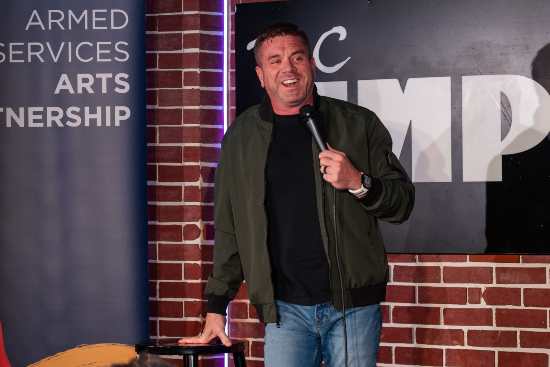
Humor gave Dewayne a way to process his past. It also helped him reconnect with parts of himself he had put away.
“Being around people where it was OK to be creative and expressive—that changed everything.”
The defining moment came when he performed outside the classroom for the first time.
“Real people laughed — not just students,” he remembers. “That’s when it clicked.”
Now, Dewayne brings a topic many people might find taboo to the center of the room. He uses humor to raise awareness of veteran mental health, so others can understand what they can’t always see.
“People say I don’t look disabled. I tell them, ‘That’s because you can’t see the movie that I'm watching.’”
When he performs, he feels relief.
“When I’m on stage, it’s the only time I can just be in the moment,” he says. “Everything else goes away.”
By 2020, Dewayne became an ASAP instructor and hosted Zoom comedy shows during the COVID pandemic. By 2021, he left his government job to pursue comedy full-time, helping other veterans discover humor as a tool for connection and healing.
Watch an ASAP Comedy Bootcamp Show
Laughter is More than a Punchline
Neither man describes comedy as a cure. Instead, they say it’s a step forward.
“It isn’t always about becoming a stand-up comedian,” says Dewayne. “I had no idea the amount of deep friendships I would gain and experiences I would have.”
For some — like Danny — comedy helped him rediscover his love for the arts.
“I could see all these possibilities now,” he says, adding that after the stand-up course, he tried improvisational comedy and began writing again. The San Diego Poetry Annual selected one of his poems for publication. He is also planning a return to acting.
“That possibility wasn’t there before,” he says. “Now it is.”
Progress and Possibilities

Empowered by his experiences, Danny joined ASAP in 2025 as a program manager, leading activities in San Diego.
He also got more engaged with WWP. Currently, he’s working on improving his physical health, including his fitness and sleep. He also began the process to participate in WWP’s accelerated brain health program, Warrior Care Network.
This two-week program helps veterans address complex trauma through clinical programs and complementary therapies designed to support their well-being. For Danny, Warrior Care Network offers a unique opportunity for continued growth, especially as a father to a 2-year-old.
“If I want my daughter to learn how to regulate her emotions in a healthy way, I’ve got to learn that, too. Warrior Care Network will help me do that,” he says.
More importantly, “I am not alone anymore. I have a community now.”
As for Dewayne, when he’s not teaching comedy workshops, he is usually on the road, sharing military humor on stages around the globe. The long hours away from family can be difficult, he admits. But the impact keeps him going.
“Watching a veteran who was once isolated, walk back into a community – through comedy, through conversation, sometimes through simply showing up – it’s worth it all,” he says.
Discover Opportunities to Connect with WWP.
Contact: Cynthia Weiss – Public Relations, cweiss@woundedwarriorproject.org, 904.738.2589
About Wounded Warrior Project
Wounded Warrior Project® (WWP) is the nation’s leading veterans service organization, focused on the total well-being of post-9/11 veterans, active-duty service members, and their families. Our programs, advocacy, and awareness efforts help warriors thrive, provide essential lifelines to families and caregivers, and prevent veteran suicides. Learn more about Wounded Warrior Project.

“Life has changed quite drastically,” says Army veteran Bill Geiger, reflecting on the 10 years since he decided to get help for his post-traumatic stress disorder (PTSD). “Back then, I was...

After years of trying to manage the physical and emotional effects from his time in the Marines, Sal Gonzalez no longer recognized the man staring back at him. The scale read almost 300 pounds. He...

Veterans and service members often carry experiences from service that stay tucked away for years – not because they don’t matter, but because talking about them can feel exhausting. Over...