Rebuilding After the Unexpected: How Warriors to Work Helped an Air Force Veteran Find New Direction
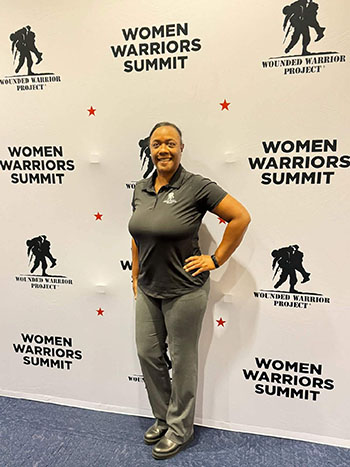
When Air Force veteran Alethea Chatman received news that she had lost her civilian job, the moment didn’t feel real. After more than a decade of military service and years working in federal investigations, she suddenly found herself without the stability she had built her life around.
“There are no words to describe the emotions, the trauma,” Alethea recalled. “You’re just standing still, and somebody snatches the rug out from under you.”
The loss didn’t only impact her finances — it struck at her identity, her confidence, and her sense of security.
She remembered thinking, “How did I get here and what do I do now?”
A Career Built on Service
Alethea served in the Air Force Reserves for a decade, working in services, information management, and special investigations. Her military experience then extended into her civilian career. She took on investigative roles that demanded accuracy, leadership, and integrity.
At the Department of Veterans Affairs (VA), Alethea worked to ensure veterans were paid accurately. It was meticulous and meaningful work.
After leaving the VA, Alethea continued her investigative work with the Department of Defense and eventually the National Institutes of Health, focusing on civil rights and administrative investigations. But when federal cutbacks hit her office, everything changed.
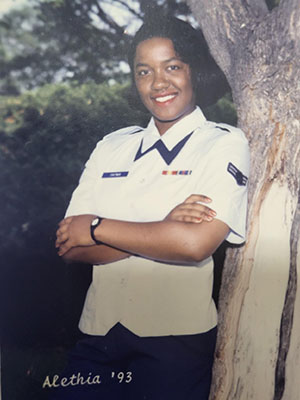
Alethea went from serving in the Air Force Reserve to serving the country in her civilian jobs.
The job loss wasn’t something she could prepare for emotionally — or practically.
“It was devastating,” she said. “We were just blindsided.”
A Mental and Emotional Toll
The job loss affected more than Alethea’s finances. COVID‑era remote work, combined with her daughter leaving for college, left her feeling isolated. When this workforce reduction hit, the isolation deepened.
She leaned heavily on therapy and her long-standing connection with Wounded Warrior Project® (WWP), which she joined in 2013, during another difficult chapter of her life.
“I was at a low point then … and it was life‑changing, really, everything I’ve experienced through Wounded Warrior Project,” Alethea said.
WWP® gave her connection, community, and an outlet. One of the biggest benefits was engaging her in a sport she was previously unfamiliar with.
“Wounded Warrior Project introduced me to golf,” she said with a smile. “Being outdoors, being in tune with what’s right in front of you … when you’re out there, you’re not thinking about any issues. It’s therapy.”
A Job Search Full of Hurdles
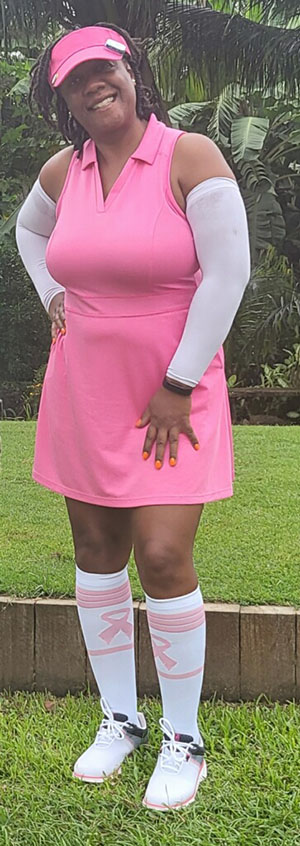
Alethea in her "happy place," on a golf course. Alethea learned to play golf through WWP, and developed a passion for it.
As she searched for a new job, Alethea quickly realized the job market had changed. In her words, the biggest barrier was “getting past AI.”
“I could apply for something at 5 pm, and by 10 pm, it would say they’d selected someone else,” she explained.
Job fairs weren’t much better.
“People say, ‘I’ll put your résumé on top,’ but you never hear back,” she said. “It felt like a waste.”
Her confidence wavered, but she kept pushing forward.
Translating Military Experience into Civilian Confidence
Eventually, Alethea turned to Warriors to Work, WWP’s career counseling and job placement program. It became the turning point she desperately needed.
Warriors to Work empowers veterans and their family members to find meaningful employment, build financial resilience, and translate their military strengths into civilian careers. The program provides personalized, one‑on‑one career support — including resume writing, interview preparation, salary‑negotiation education, and dedicated career counseling.
For Alethea, that individualized support made all the difference. She connected with a Warriors to Work specialist, Sodia Thompson, who guided Alethea as she rebuilt her career and maintained support throughout the process.
Veterans often face financial strain, employment gaps, and difficulty translating military experience to civilian roles. According to WWP’s Warrior Survey,* nearly 6 in 10 registered warriors experience underemployment, and 67% report financial strain, often rooted in unstable employment or dramatic shifts such as job loss.
Finding a New Direction with Warriors to Work
Sodia and WWP introduced Alethea to new training options, including a pharmacy technician course — something she had never considered.
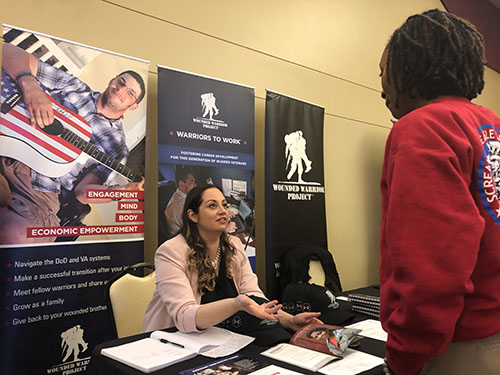
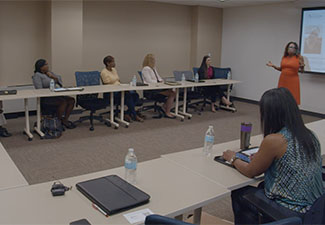
A warrior talks to members of the WWP Warriors to Work team during an employment boot camp.
She was also encouraged to attend a Deloitte career boot camp in Washington, DC, but getting there was its own journey. Alethea was returning from international travel when multiple flight delays and cancellations left her sleeping overnight in a JFK airport chapel.
“I was exhausted,” Alethea said. “But I told myself: I’m going. I need a job.”
The boot camp turned out to be transformative. She felt energized, engaged, and supported.
“The speakers were great. The activities were great. And the mock interviews — that’s what I took away the most,” she said.
By the second day of the event, Alethea had completed multiple mock interviews. She was ready to stop, but was encouraged to try one more interview with Deloitte.
Her VA experience caught the attention of a Deloitte representative.
“She said, ‘I think I’ve got something for you.’ I didn’t think much of it … but the next day, the recruiter called me,” Alethea said.
Soon after, Deloitte offered her a job.
“It was just amazing — exciting,” Alethea said of the opportunity to try something new and how quickly things moved from the boot camp.
Overcoming the challenges to attend the boot camp despite her exhaustion not only paid off but also highlighted Alethea’s overwhelming determination.
“Her perseverance is a huge success story,” Sodia said.
Redefining Success and Well‑Being
Finding a new job gave Alethea a renewed sense of purpose and stability. It also forced her to confront a deeper lesson. Success, she realized, isn’t just about holding a title — it’s about feeling grounded, healthy, and whole.
“My therapist told me, ‘You have to take care of you,’” she said.
That message became a turning point for Alethea as she continued her career path and saw her daughter join the Air Force Reserves and graduate from college. She began to understand that prioritizing her mental and physical health wasn’t a luxury — it was essential.
“We’ve been conditioned to believe we have to work until 60 or 70 and to put in long hours … that it’s the most important thing, but your life is priceless,” she said.
This shift in mindset helped Alethea reframe her job loss. She began to see it not only as an obstacle but as an opportunity to rebuild her life with intention. Instead of focusing on what she lost, she started paying attention to what she needed.
“Maybe this happened because I needed to prioritize my health — mental and physical.”
Facing the Unknown and Being Fearless
As Alethea moved through this uncertain period of her life, she learned that being fearless doesn’t mean having all the answers — it means being willing to take a step forward even when you don’t. For her, that included something many veterans struggle with — reaching out for help.
Opening up, asking for support, and letting others walk beside her were among the bravest steps Alethea took. She discovered that strength isn’t about going at it alone.
Sometimes you just need something or someone to help you realize what you need to do,” she said.
Tips for facing job loss1. Build financial savings. Having a nest egg or rainy-day fund can help alleviate some of the immediate financial stress that comes with the loss of income. 2. Be open to change. Don’t be afraid to explore new paths. Alethea qualified for a pharmacy technician class and decided to give it a try, expanding her job skills outside of what she’d been doing. “Sometimes you have to have an open mind to try something different instead of hanging on to what’s comfortable,” she said. 3. Network as much as possible. Connections matter. Job fairs, workshops, and even online events can help you meet people across industries and open doors to new opportunities. “Networking is No. 1,” Sodia said. “You’ve got to get out there.” 4. Use available resources. Veterans service organizations like WWP can help warriors translate their military skills into civilian jobs, practice interviews, and set career goals. “We’re here to empower them, so that they can feel confident and know they can do this,” Sodia said. |
Learn more about how WWP helps warriors thrive for a lifetime.
Contact: Paris Moulden, Public Relations, pmoulden@woundedwarriorproject.org, 904.570.7910
About Wounded Warrior Project
Wounded Warrior Project® (WWP) is the nation's leading veterans service organization, focused on the total well-being of post-9/11 veterans, active-duty service members, and their families. Our programs, advocacy, and awareness efforts help warriors thrive, provide essential lifelines to families and caregivers, and prevent veteran suicides. Learn more about Wounded Warrior Project.

When veterans transition to civilian life, they often search for jobs in civilian fields where they can put unique experiences and skills to work. However, finding meaningful employment after...
Effective team leader … Versatile and goal-oriented … Extremely organized with an attention to detail … Excellent problem-solving skills … These are common skills listed on a resume and...

Worry, fear, and anxiety about being able to pay monthly bills or save for the future can lead to financial stress. For wounded veterans, the COVID-19 pandemic added to those pressures. In a 2020...

Like many other veterans, Arnulfo Dauto found it difficult to adapt to civilian life. In the service, there was a defined mission, built-in camaraderie, and an overwhelming sense of purpose....